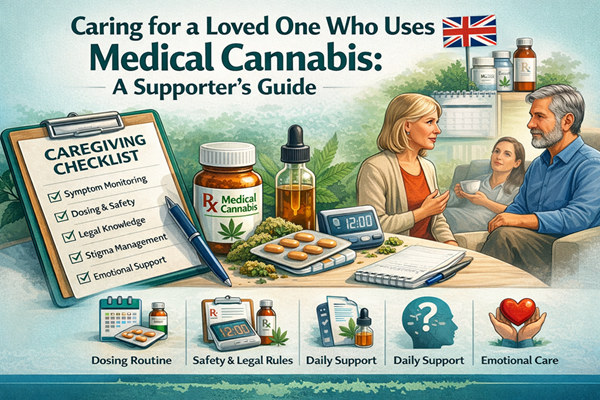
Caring for a Loved One Who Uses Medical Cannabis: A Supporter’s Guide
2026 January 30 | by: Marucanna Admin
Caring for someone who uses medical cannabis isn’t just about compassion, it’s about competence. As a family caregiver, you’re often the unofficial medication manager, symptom tracker, legal buffer, and emotional anchor all rolled into one.
Medical cannabis can be genuinely life-changing for people with chronic pain, epilepsy, MS, cancer-related symptoms, anxiety disorders, and more. But it’s not magic, and it’s not simple. If you’re supporting someone who relies on it, here’s what you actually need to know.
1. Understand the basics
In the UK, medical cannabis has been legal by prescription since 2018, but only through specialist doctors and private clinics in most cases.
What matters for you as a caregiver
- It is prescribed, not guessed, not DIY
- Products vary widely in THC and CBD content
- Effects differ from person to person (sometimes dramatically)
THC vs CBD – The short version
- THC: Pain relief, muscle relaxation, appetite stimulation, but can cause dizziness, anxiety, or sedation
- CBD: Calming, anti-inflammatory, seizure control, minimal intoxication
Most prescriptions involve balanced or tailored ratios, not high-THC “street cannabis”.
Your job isn’t to master pharmacology, it’s to notice what works and what doesn’t.
2. Dosing oversight: Be calm, methodical, and slightly suspicious
Let’s be blunt: dosing errors are the most common problem caregivers deal with.
Medical cannabis dosing is often:
- Low and slow
- Adjusted weekly, not daily
- Changed based on symptom response
What you should actively monitor
- Time taken vs symptom relief
- Sedation, confusion, or anxiety
- Changes in appetite, sleep, mood, or mobility
- Missed or doubled doses (it happens)
Red flags that mean “call the clinic”:
- Sudden confusion or paranoia
- Persistent nausea or dizziness
- Falls or coordination issues
- Symptoms getting worse, not better
Tip: keep a simple symptom log. Two minutes a day saves weeks of guesswork later.
3. Daily routines: Structure beats guesswork
Medical cannabis works best when it’s part of a predictable routine, not an “as-needed panic button”.
Practical routine tips
- Same dosing times each day
- Use alarms or pill apps (especially for oils)
- Avoid mixing with alcohol, seriously, don’t
- Allow time after dosing before walking, driving, or eating
If your loved one uses inhaled cannabis (vaping):
- Make sure the device is clean
- Monitor inhalation technique
- Watch for coughing or breathlessness
You’re not being controlling, you’re being safe.
4. Legal reality check
This is where many caregivers get caught out.
What is legal
- Cannabis prescribed by a registered specialist
- Stored in original packaging
- Used only by the named patient
What isn’t
- Sharing medication (even with family)
- Driving while impaired
- Carrying it without proof of prescription
- Taking it abroad without explicit permission
Keep copies of the prescription (digital and printed). If questioned by police, calm documentation beats arguments every time.
5. Managing stigma without burning yourself out
Let’s not pretend: stigma still exists. Some family members, neighbours, or even healthcare professionals will judge first and ask questions later.
You don’t owe anyone a lecture.
Useful responses:
- “It’s a prescribed medication.”
- “It’s consultant-led treatment.”
- “We’re following medical advice.”
That’s it. End of conversation.
Your energy is better spent supporting your loved one, not educating every sceptic with an opinion.
6. Emotional support: This part actually matters most
Medical cannabis doesn’t just affect symptoms, it affects identity, independence, and confidence.
Your loved one may:
- Feel guilty about needing it
- Worry about being judged
- Fear becoming dependent
- Feel frustrated during dose changes
Be patient. Some days will feel like progress; others will feel like setbacks. That’s normal.
And here’s the uncomfortable truth: caregivers need support too. If you’re exhausted, snappy, or overwhelmed, that’s not failure, that’s a signal.
Talk to someone. Get respite where you can. Burnt-out caregivers help no one.
7. When to re-evaluate treatment
Medical cannabis isn’t “set and forget”.
Re-assessment is needed if:
- Symptoms plateau or worsen
- Side effects outweigh benefits
- Other medications change
- Life circumstances shift
Encourage regular follow-ups with the prescribing clinic. Adjustments are part of the process, not a sign it’s failing.
Final word: Be informed, not intimidated
Supporting someone who uses medical cannabis doesn’t require blind faith or constant worry. It requires attention, honesty, and consistency.
You’re not just helping manage a medication, you’re helping someone reclaim quality of life. That’s no small thing.