Workplace Rights and Medical Cannabis in the UK

2026 March 13 | by: Marucanna Admin
Since medical cannabis became lawful via specialist prescription in 2018, a new question has emerged for many patients.
What happens at work?
Employees who are prescribed medical cannabis often worry about disclosure, drug testing, safety policies, and discrimination. Employers, in turn, may be uncertain about how medical cannabis fits within existing workplace frameworks.
Understanding the legal and practical landscape in the UK helps both sides approach the issue with clarity.
The legal status of medical cannabis
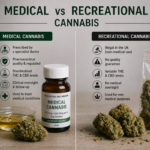
Medical cannabis is legal in the UK when prescribed by a specialist doctor and used in accordance with that prescription.
Recreational cannabis remains illegal.
This distinction is critical. A valid prescription changes the legal position of possession and use. It does not remove all workplace considerations.
Employment laws, health and safety obligations, and anti-discrimination legislation continue to apply.
Is medical cannabis treated like any other prescribed medication?
In many respects, yes.
If an employee is prescribed medication for a diagnosed condition, employers are generally expected to consider that context rather than react solely to the name of the substance.
However, medical cannabis can create additional sensitivity because it may appear on drug tests and carries public stigma.
Employers are entitled to maintain safe working environments. Employees are entitled to fair treatment and reasonable consideration of medical needs.
The balance between these two principles defines most workplace situations.
Disclosure: Do employees have to tell their employer?
There is no blanket rule requiring disclosure of every medication.
In practice, disclosure becomes relevant when the medication could affect performance or safety.
For example, if an employee operates heavy machinery or drives as part of their role, discussion may be necessary to ensure compliance with safety policies.
If the medication preserves performance and the role is safety critical, disclosure may be more urgent.
Decisions should be guided by workplace risk rather than fear of stigma.
Drug testing and prescribed medical cannabis
Drug testing policies in the workplace vary by industry.
In safety-sensitive sectors, such as transport, construction, or aviation, routine or random testing may occur.
Medical cannabis may produce positive test results for THC. A valid prescription can provide lawful explanation, but it does not automatically override employer safety obligations.
Employers may still assess whether the employee is fit for duty.
The key issue is impairment, not merely the presence of the substance.
Maintaining documentation and communicating proactively where appropriate can reduce misunderstanding.
Driving for work
Driving laws in the UK allow patients prescribed certain controlled drugs, including medical cannabis, to drive provided they are not impaired and are following medical advice.
However, employers may apply additional standards for company vehicle use.
If driving forms a core part of the role, early discussion is advisable. Employers may request medical confirmation of fitness to drive.
Employees must prioritise safety and compliance with both the law and workplace policies.
The Equality Act and reasonable adjustments
Some individuals prescribed medical cannabis have conditions that qualify as disabilities under the Equality Act 2010.
Where a condition has a substantial and long-term impact on normal daily activities, employers have a duty to consider reasonable adjustments.
Reasonable adjustments might include modified duties, flexible scheduling, or temporary reassignment if medication affects performance during the adjustment phase.
Medical cannabis itself is not the protected characteristic. The underlying condition may be.
Understanding this distinction prevents misplaced assumptions.
Can an employer refuse medical cannabis use?
Employers cannot lawfully discriminate against an employee solely because they have a medical condition or are taking prescribed medication.
However, employers can enforce health and safety requirements.
Employers may lawfully restrict certain duties if a role involves high-risk activity and there is no way to mitigate impairment risk.
Each case depends on context. Blanket policies without individual assessments risk legal challenges.
Structured dialogue reduces conflict.
Performance and impairment
Medical cannabis is prescribed in controlled doses. The aim is symptom management without significant cognitive impairment.
Nevertheless, individual responses vary.
Employers are entitled to address performance concerns if they arise. Employees should monitor their own functioning responsibly.
If side effects interfere with work tasks, consultation with the prescribing clinic may allow dose adjustment or alternative formulation.
Workplace success depends on shared responsibility.
Practical steps for employees
Should you receive a medical cannabis prescription and feel anxious about your job, take into account the following measures:
- Review your employment contract and workplace policies.
- Assess whether your role involves safety-critical tasks.
- Keep documentation of your prescription.
- Avoid attending work impaired.
- Seek occupational health advice if available.
Preparation improves confidence.
Practical considerations for employers
Employers facing medical cannabis disclosure should focus on evidence rather than assumption.
- Request a prescription confirmation where necessary.
- Assess actual job risk rather than reacting to terminology.
- Consider occupational health input.
- Document decision-making clearly.
An informed approach protects both safety and fairness.
Common misconceptions
Medical cannabis use does not automatically mean an employee is unfit for work.
A positive drug test does not necessarily equal unlawful conduct if a valid prescription exists.
Equally, prescription status does not grant unlimited protection if impairment creates a safety risk.
Clarity lies between these extremes.
Navigating conversations constructively
Workplace discussions about medical cannabis should remain professional and fact-based.
Employees should avoid defensiveness. Employers should avoid stigma-based assumptions.
Focusing on job requirements, safety and documented medical guidance helps maintain neutrality.
Open communication often prevents escalation.
The broader workplace reality in 2026
As medical cannabis prescribing increases in the UK, workplaces are gradually encountering the issue more frequently.
Policies are evolving. Awareness is improving.
Most cases are resolved through straightforward discussion rather than legal confrontation.
Understanding rights and responsibilities on both sides supports smoother outcomes.
Final perspective
Medical cannabis is lawful in the UK when prescribed by a specialist. Workplace implications depend on roles, safety considerations, and communication.
Employees retain rights against discrimination linked to underlying medical conditions. Employers retain duties to maintain safe working environments.
The practical path forward usually lies in informed dialogue, documented assessments, and responsible conduct rather than assumption or alarm.
Clarity, not conflict, defines most successful workplace outcomes.