Quality Counts: What UK Medical Cannabis Testing Standards Mean for Patients
2025 December 12 | by: Marucanna Admin
As demand for medical cannabis grows in the UK, more people are trying to understand what makes a prescription product safe, consistent, and clinically reliable. Many patients hear terms like GMP certification, terpene profiles, batch testing, or COAs but have never been shown what these actually mean or why they matter. The result is confusion and, in some cases, misplaced trust in unregulated products that do not meet basic safety requirements.
Understanding how UK medical cannabis is tested can help patients feel confident that their cannabis prescription is safe, controlled, and produced to a medical standard rather than a commercial one.
What GMP certification means
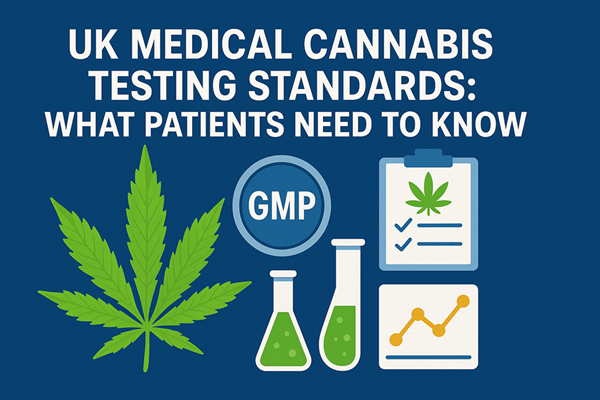
In the UK, legal medical cannabis must be produced under Good Manufacturing Practice standards. GMP is a strict pharmaceutical-grade framework designed to ensure products are consistent from one batch to the next. It sets rules for cultivation, drying, extraction, storage, processing, and packaging.
Under GMP conditions:
- The growing environment is controlled and monitored
- Plants are free from harmful pesticides
- Airflow, temperature, humidity, and sanitation are regulated
- Staff follow documented procedures for every stage of production
- Every batch is tested before it reaches a patient
This level of oversight is not optional. It is a legal requirement for products distributed through licensed UK pharmacies.
Why batch testing is essential
Batch testing confirms that what appears on a product’s label is accurate. Laboratories check for:
- Cannabinoid content, including THC and CBD
- Terpene profile
- Microbial contamination
- Heavy metals
- Residual solvents
- Pesticides
These tests protect patients from impurities that could cause infection, respiratory irritation, or serious health complications. They also ensure the dose patients receive is stable and predictable, which is essential when finding your therapeutic window.
Understanding COAs
A Certificate of Analysis (COA) reports the exact lab results for a specific batch. Many patients do not know they have the right to ask for one. A COA provides transparency by showing:
- THC percentage
- CBD percentage
- Presence of minor cannabinoids
- Terpene composition
- Pass or fail results for contaminants
A legitimate COA should be batch-specific, dated, and produced by an accredited laboratory. Clinics and pharmacies are expected to provide this information when requested.
Why terpene profiles matter
Most people focus on THC and CBD, but terpenes also shape the experience and therapeutic potential of a product. Terpenes like myrcene, limonene, linalool, and caryophyllene may influence how a patient feels, how quickly effects come on, and what symptoms the product may support.
For example:
- Myrcene may contribute to relaxation
- Limonene may support mood
- Caryophyllene interacts with CB2 receptors linked to inflammation
While evidence is still emerging, terpene profiles help clinicians guide patients toward products that align with their needs instead of relying on strain names or marketing terms.
Why some products are recalled
Recalls can happen in any medical industry, and cannabis is no exception. Common reasons include:
- Inconsistent cannabinoid content
- Microbial contamination
- Incorrect product labelling
- Packaging issues that affect shelf stability
- Failure to meet GMP expectations
Although recalls can be frustrating, they are a sign that the regulatory system is working. It indicates that products are actively monitored and pulled when standards are not met.
The risk of black-market alternatives
A major problem in the UK is that many people still rely on unregulated cannabis because they believe it is cheaper or easier to access. However, black-market products carry significant risks:
- No batch testing
- Unknown THC content
- No screening for mould or bacteria
- Possible pesticide contamination
- Inaccurate labelling
- No medical supervision
Patients using these products often struggle with inconsistent effects, unpredictable dosing, and a higher chance of side effects. Verification of actual consumption is impossible without COAs or GMP oversight.
Why testing standards are relevant for patients
Reliable testing does more than protect safety. It can directly impact treatment outcomes.
Accurate dosing
Consistency allows patients to adjust dosage carefully under clinical supervision. If the THC content fluctuates, symptom control becomes harder.
Reduced side effects
When contaminants are removed and cannabinoid levels are stable, patients tend to experience fewer unwanted effects.
Trust and transparency
Knowing exactly what you are doing builds confidence, especially for people who were previously sceptical or anxious.
Better long-term treatment planning
Stable products make it easier for clinicians to track progress and make personalised adjustments.
How testing will evolve in the future
The UK’s medical cannabis sector is still young, and testing methods will continue to expand. Areas likely to grow include:
- More detailed terpene reporting
- Wider recognition of minor cannabinoids
- Improved stability testing
- Greater standardisation between labs
- Faster recall mechanisms
As regulations evolve, patients should expect even more clarity, stronger safety systems, and improved product diversity.