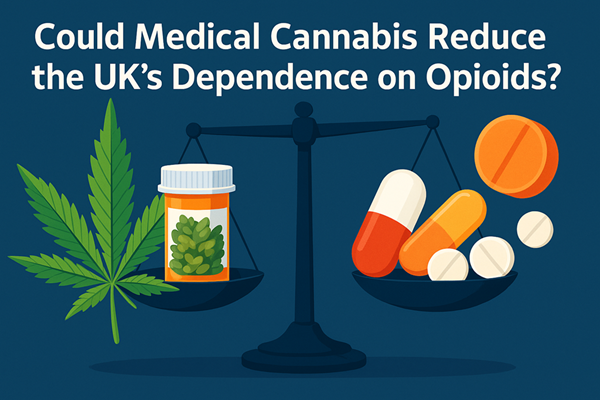
Could Medical Cannabis Reduce the UK’s Dependence on Opioids?
2025 December 8 | by: Marucanna Admin
The UK has seen a steady increase in long-term opioid use, especially among people living with chronic pain. Opioids may provide short-term relief, but their long-term effectiveness is limited, and they carry significant risks. Dependence, tolerance, constipation, sleep disturbance, and withdrawal symptoms make many patients feel trapped between pain and side effects.
As medical cannabis becomes more accessible through private clinics, both patients and pain specialists are asking an important question. Could cannabis-based medications provide a safer option for certain individuals and assist in diminishing dependence on opioids? The answer is complex, but emerging evidence suggests it may play a role when managed within a clinical framework.
Why opioid use has become a problem
Opioid prescribing in the UK rose sharply between the early 2000s and mid-2010s. Although prescribing has stabilised, many people remain on medications like codeine, tramadol, morphine, or oxycodone for much longer than intended. For chronic pain, the evidence for long-term benefit is limited, yet patients often rely on these medications because alternatives have not worked or their pain specialists are difficult to access.
The body adapts to opioids over time. This creates two problems. The medication becomes less effective, and higher doses may be needed to achieve the same level of relief. At the same time, withdrawal symptoms can appear if someone tries to reduce their dose. This makes a lot of people feel that they can’t stop taking their medication or even cut back on it without help.
Why medical cannabis is entering the conversation
A growing number of clinicians are exploring medical cannabis as part of a broader pain-management strategy. While cannabis-based medicines do not replace opioids across the board, several early findings are pushing interest forward.
Different mechanism of action
Cannabinoids interact with the body’s endocannabinoid system, which helps regulate pain, inflammation, and nervous system responses. This makes cannabis-based treatment fundamentally different from opioid therapy and may offer benefit where opioids provide limited relief.
Lower risk of dependence
Although cannabis can have side effects, the risk of respiratory depression or fatal overdose is significantly lower than with opioids. Some patients report being able to reduce opioid doses after starting cannabis-based treatment under clinical supervision.
Support for coexisting symptoms
Medical cannabis may help patients manage insomnia, anxiety, muscle tightness, or neuropathic sensations that often sit alongside chronic pain. Even partial relief of these symptoms can reduce a patient’s perceived pain burden.
What evidence currently shows
Research is ongoing, and the medical community continues to approach the topic with caution. Still, several trends are emerging.
Real-world patient outcomes
Private UK clinics report that many patients using cannabis-based medicines reduce their opioid consumption over time. These findings reflect patterns seen in other countries with regulated medical markets. Some individuals manage to taper completely, while others continue using lower doses.
Observational studies
Studies from Canada, Israel, and parts of Europe indicate that patients with chronic pain often decrease opioid use when cannabis is introduced as part of a monitored treatment plan. Pain specialists are taking these findings seriously, despite their lack of definitiveness.
Limitations
Cannabis is not equally effective for all types of pain. Neuropathic pain, fibromyalgia, arthritis-related pain, and musculoskeletal pain may respond differently. Large-scale UK clinical trials are needed to establish more precise evidence.
Where medical cannabis may help most
Clinics frequently see interest from people living with:
- Neuropathic pain
- Arthritis and inflammatory conditions
- Complex regional pain syndrome
- Fibromyalgia
- Post-surgical or post-injury pain
- Back pain and sciatica
Many of these patients have already tried multiple medications, physiotherapy, injections, or surgical interventions. For some, cannabis-based medicines help them reduce reliance on opioids by supporting daily function, sleep quality, and emotional wellbeing.
Why cannabis will not replace opioids entirely
Opioids still have an important role in acute pain management, such as after surgery or for emergencies. Medical cannabis is not a direct substitute in those contexts. The goal is not to eliminate opioids altogether but to offer a safer long-term option for patients who currently rely on high doses to manage chronic symptoms.
Challenges to implementation
Even if medical cannabis can help reduce opioid dependence, several obstacles remain.
Clinical caution
Many doctors feel uncertain due to a lack of large-scale UK trials and limited training in cannabis-based prescribing.
NHS restrictions
The NHS does not routinely support cannabis prescriptions for chronic pain, leaving most patients to seek private treatment.
Cost
Although prices have fallen, ongoing prescriptions and consultations can still be expensive for long-term management.
Stigma
Some patients worry how friends, family, or employers will respond, even when their prescription is legal and monitored.
The future of pain management in the UK
There is a clear need for safer long-term strategies for chronic pain. Early evidence suggests medical cannabis may become part of a more balanced approach that reduces dependence on opioids and improves patient quality of life. More research, clearer guidelines, and increased education for healthcare professionals will be essential to make this shift possible.
As understanding grows, many clinicians believe cannabis-based medicines could help reshape modern pain management, offering relief to patients who have struggled for years with limited options.